I am very late to the Baldur’s Gate 3 party, and honestly, this is the one hype train I wish I’d been aboard from the beginning. Alas, I didn’t start my first run until just before the final patch.
And when I finally did, it quickly became one of my favourite games of all time. It is a truly excellent game, a rare gem of a AAA title that exudes the love and passion of the team behind it. I fell head over heels for the characters, the world, and to my surprise, the gameplay. It absolutely deserved the awards it received, and unless something amazing comes along it’ll probably be my game of the decade.
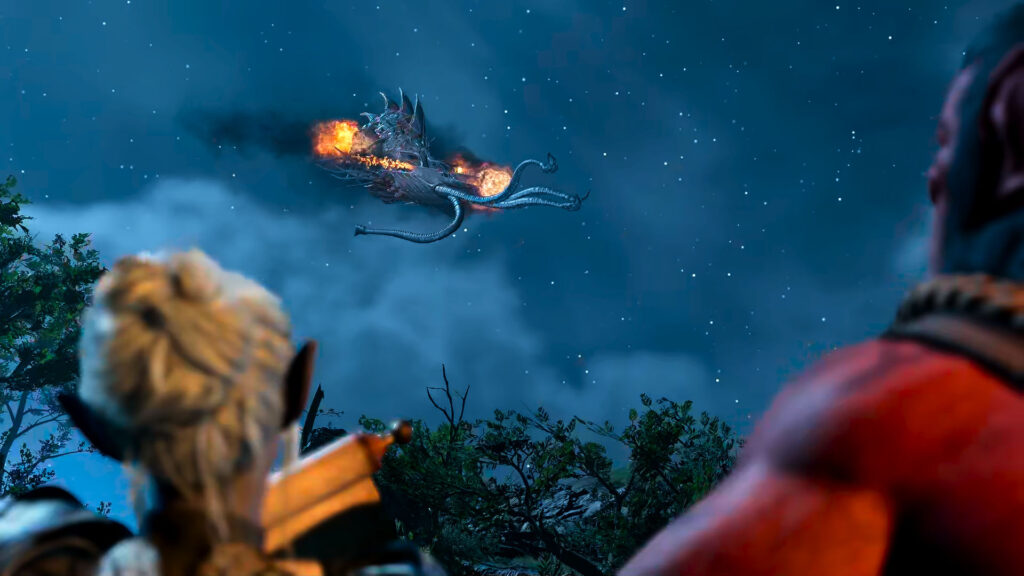
However, it isn’t perfect, with flaws to be glared at and lessons to be learned. One major point of contention is the third act, which is often regarded as the weakest of the three. I agree to an extent, but for different reasons than you might expect.
While I’ve tried to avoid specific spoilers, I’m also going to pretty much lay out the structure of the game and its final act, and the screenshots will show environments and characters that don’t show up until fairly late. There’s nothing quite like a blind run of this wonderful game, so if you intend to play it and haven’t yet, I’d recommend bookmarking this and coming back later.
It Just Hits Different
I knew Act 3 would play differently from the first two acts going in- though this was before I really started picking up spoilers (I should have held off my burning lore and design questions for after I’d finished the game), I’d heard that Act 3 was different, more intense, jankier, and/or even just plain bad. Depending, of course, on who you ask.
My opinion? It definitely feels different than the first two acts, that’s for sure.
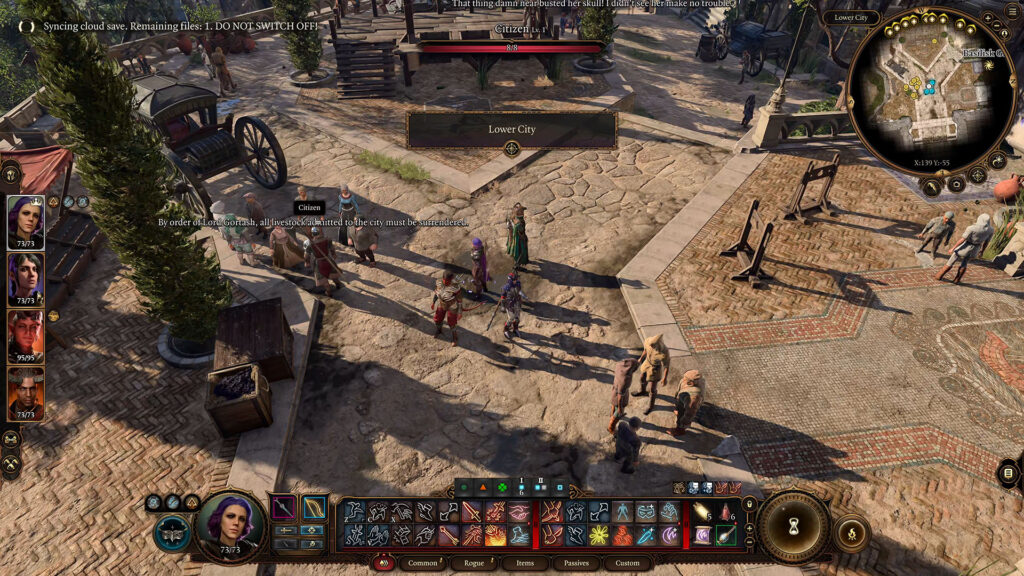
That difference really hit home when I reached the Lower City: by that point I had a journal full of almost-complete quests and a map full of markers. There was only one major worldspace left, and pretty much every new thing I discovered there ended up tying into an existing quest or plot thread. The sheer amount of stuff to do- and stuff I knew I had to do versus discovering organically- overwhelmed me to the point where I had to take a break from the game.
The overall feeling? We’re in the endgame now, and we’ve got all these loose ends to tie off before the finish.
That’s a marked contrast from the first two acts. Those are heavy on exploration, with quests starting, characters being introduced, and plotlines picked up as you move through the world. Each area has its own zone story, a central conflict that ties into the greater plot, wrapped up in a mystery to be solved. There’s a lot of skulking about and sticking your nose into things, quiet character moments and varied encounters that can be resolved in wildly different ways.
Act 3 is pretty much a straight boss rush. Not one but two big bosses, plus massive fights concluding the companion quests and a few optional ones on the side.
That’s not to say it doesn’t have some great quiet moments, or anywhere at all to explore, but it’s a lot more focused on final showdowns and their aftermath. It’s focused on endings, not beginnings. The closest thing to a zone story is the final part of the main quest- every thread that’s been picked up earlier is tied off here.
Adding to the feeling of finality, I reached the level cap a few quests into the Lower City, and that’s not uncommon if you didn’t rush through the first two. There’s some extremely powerful loot to be had, but unless you respec and start over, advancement and experimentation with your character builds ends long before the game does.
I don’t think Act 3 is, conceptually, worse than the prior acts. But it is very different, and it stands to reason that those who fell in love with the game because of how the first act played might be disappointed by the third. Conversely, for others Act 3 is their favourite one, and it might just be because they prefer this style of gameplay.
All Roads Lead To The Gate
I also saw a lot of discourse around why Act 3 felt worse than previous acts (and/or whether it was worse or just different, and/or how bad or different it was). There’s the theory that the Upper City was cut late in development and everything shoved into the Lower City (as far as I know, that was debunked). There’s a shrug and a “well, Larian always runs out of steam on the last act”.
I think that’s overthinking it.
Act 3 isn’t the way it is because it was cut down or rushed*. It’s the way it is because that’s an inevitable consequence of the way the game is structured.
*although I think that’s also at play, and I’ll get to that
That sounds a bit tautological, so to explain, let’s go back to the transition between acts and where your party and the world is at that point. Specifically, after fighting the final boss of act 2 but before entering the open worldspace of act 3 proper.
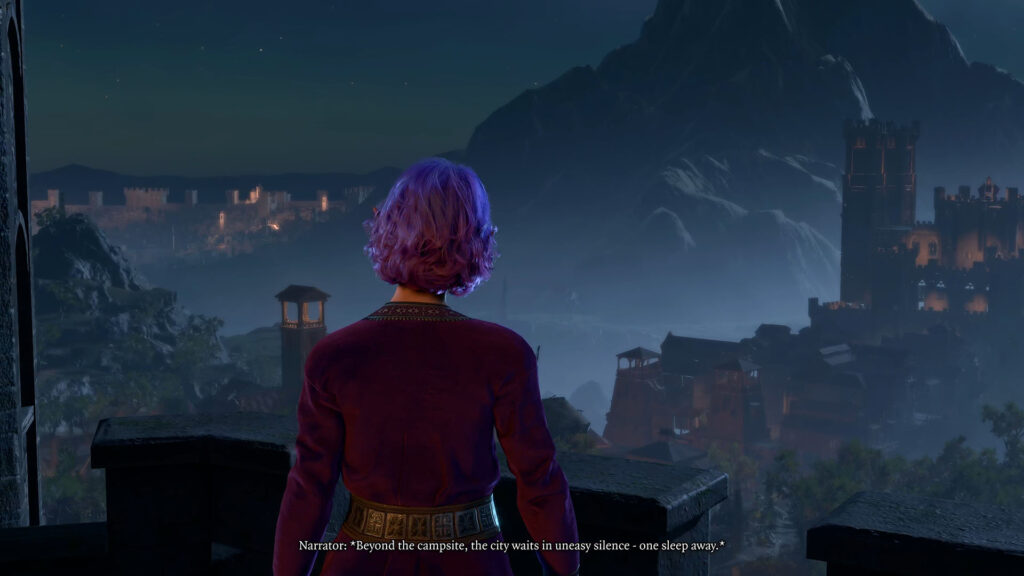
It’s a weird quiet time. A calm before the storm that you feel as the player and the characters acknowledge. You just beat one of the three big bads, maybe saved the whole region from its curse, and that’s worth celebrating, but you’ve also found out that this conspiracy goes deeper than you thought, the bad guys are gunning for Baldur’s Gate, and it’s about to go from bad to worse.
Looking at it on a bit more of a meta level, you’ve finished the zone story for Act 2, with most of the region-specific threads wrapped up pretty cleanly. The main quest has advanced one station, with the pretty obvious next steps of going after the other two big bads. Your companion quests have been steadily advancing- one jumping dramatically with the zone quest- and most of them are closing on a long-hinted-at final confrontation.
For most of the first two acts, the focus has been on finding answers, trying to find a way to survive, figuring out who’s behind all this. You don’t have all the answers quite yet, but you know the gist of it, and you’ve almost literally got a hitlist in hand. The final part of Act 2 marks a shift from discovery and mystery to action and resolution.
I don’t think it’s a stretch to say that the whole game is structured around this buildup to the titular city. Almost every plot thread of note- and a whole lot of minor ones- are laid out with a beginning and a rising action across the first two acts that builds up to a climax and denouement in the final one. And in a big, meaty RPG like this one, with so many threads to intertwine and pull at, that means there’s simply a lot to tie off toward the end.
Tough Acts To Follow
It’s easy to conflate “I don’t like Act 3 as much because it’s less my style of gameplay” with “I don’t like Act 3 as much because it’s not up to the same standard”. Separating those two was my eureka moment, and the start of the line of thinking that lead me to the conclusion above.
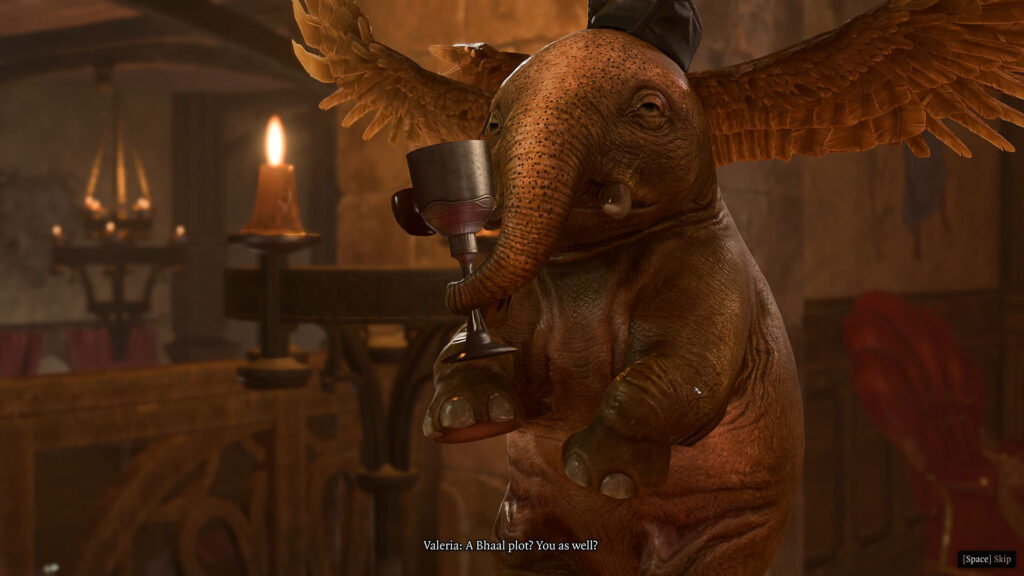
But I have to address the flying elephant in the room, which is that Act 3 really is a less polished experience than the first two acts.
In general, Baldur’s Gate 3 is extremely good about letting you solve quests in all kinds of different ways and skipping or doing parts of them out of order. In hindsight, I took an unusual path several times, and at no point did I ever feel like I’d broken the game… until Act 3. I stumbled into the midpoint of a companion quest and it worked fine, but the quest log implied I’d done things I hadn’t, and the dialogue alluded to earlier conversations I’d never actually had.
I’m not an Upper City Truther, but it’s pretty clear that cuts were made, and quite late at that. It’s not the big stuff that’s the most grating, necessarily, but the smaller details. It’s buildings you can enter, but that have almost nothing in them. NPCs that mention a problem that sounds solvable by intrepid adventurers. Anecdotes of interest that are never picked up on. Items that don’t do much and dungeons that feel like they should have more to them. A stupidly clunky puzzle, a quest with a rushed conclusion.
Less reactivity, less flexibility, less polish.
It’s still very good, to be clear, and if it were just about any other game, I probably wouldn’t have even noticed. The first two acts set a high bar that the third didn’t quite reach.
In Context
I had started hashing out a section on what other ways Baldur’s Gate 3 could have been structured, and it’s potentially interesting theorycrafting that I might get back to, but I think including it here is just going to bloat the article and stray away from the actual point. This is the Baldur’s Gate 3 we got, Larian had their reasons for building it the way they did (which I could try to guess at, but again besides the point), and although it doesn’t work perfectly for everyone, it does still work.
I don’t think Act 3 was a mistake, or a last minute salvage job, even if it is rough around the edges. The way the first parts of the game were structured- opening plot threads, pushing the player forward, building up towards confrontations and conclusions in the big city- were always going to result in a final act full of bombastic boss battles. That wasn’t something that landed for everyone, and I know I found it daunting before sort of getting into the groove.
There’s been a lot of discussion about Act 3, and I’m not sure how much I’ve meaningfully added to it. I think it’s worth viewing it with the context of how the previous acts are designed, and maybe even turning the lens around to think about some of the design decisions in those acts with the context of the final act they’d lead into. The biggest takeaway here isn’t, I think, the specific point that the structure of the final act had its roots in the opening, but rather the generalization that it’s useful to look at the whole game when trying to figure out why a specific part is put together a certain way.